
Harassed by a collection agency calling for debt that is not mine? Our 5-step action plan stops the calls. Learn what to do if a collection agency calling for debt that is not mine wrongly targets you.
The Nightmare of the Wrongful Debt
The phone rings again. It’s an unknown number, but you know who it is. An aggressive voice on the other end demands payment for a loan in a name you don’t know, or worse, a loan fraudulently taken in your name. You’re not just annoyed—you’re scared, angry, and feel powerless.
This is a terrifying and increasingly common problem. A collection agency calling for debt that is not mine in India is a nightmare scenario. You could be a victim of a simple phone number mix-up, or you could be the target of sophisticated identity theft.

My name is Anwar Hashmi, and as the chief editor of cibilized.in, my mission is to give you back that power. This is not a problem you have to “just live with.” A collection agency calling for debt that is not mine is not just an annoyance; it’s harassment that you have a right to stop.
This guide is your definitive 5-step action plan to stop the calls, protect your CIBIL score, and hold these agencies accountable.
Why You’re a Target: Uncovering the Reasons for Wrongful Collection Calls
When you receive an aggressive call demanding payment for a loan you know nothing about, it’s a terrifying experience. The immediate reaction is a mix of confusion, anger, and fear.
You’re left wondering, “Why am I being targeted?” The answer is almost always a case of bad data, mistaken identity, or a serious financial crime.
A collection agency calling for debt that is not mine is a problem that stems from one of these three common scenarios. Understanding which one applies to you is the first step in solving the problem.
The Most Common Mistake: Collection Calls for the Previous Owner of Your Phone Number
This is the most frequent and least malicious reason for wrongful collection calls. The calls are not for you, but for the person who had your phone number before you.
The “Number Recycling” Problem: How telecom companies reassign old numbers.
In India, when a person disconnects a prepaid or postpaid mobile number, telecom providers do not retire that number forever. As per regulations and to manage a finite resource, they “recycle” it. After a cooling-off period (typically 90 days of inactivity), the number is put back into the pool and assigned to a new customer—you.
Why the collection agency’s data is simply outdated and how they profit from this.
The problem is that the original borrower, who defaulted on their loan two or three years ago, used this phone number on their loan application. The bank’s file, and subsequently the collection agency’s file, is outdated.
The agency’s automated dialer is simply calling the last known number for the defaulter. They don’t know the number has been reassigned. This is the most common reason you’re getting a collection agency calling for debt that is not mine; they are just dialing an old, incorrect number from a list.
The Case of Mistaken Identity: A Bank Recovery Agent Calling for the Wrong Person

This scenario is more complex. The agency isn’t just calling the wrong number; they are actively looking for a specific person and have incorrectly identified you as that individual.
How “Skip Tracing” errors lead agencies to people with similar names or old addresses.
“Skip Tracing” is the investigative process collection agencies use to find defaulters who have “skipped” town or changed their contact details. They use various public and private databases to find new phone numbers, social media profiles, or new addresses linked to the defaulter’s name.
This process is prone to error. If the defaulter’s name is “Rajesh K. Sharma” from Delhi, and your name is “Rajesh P. Sharma” also from Delhi, the skip-tracing software might incorrectly link your contact information to their debt file.
You then start receiving calls from a bank recovery agent calling for the wrong person simply because of a lazy or automated data-matching error.
The “Reference” Trap: Getting calls for someone else’s credit card debt because you were listed as a reference (and what they can/cannot ask you).
This is a very common scenario. You are not the borrower, but your friend or relative listed your name and number as a “reference” on their original loan application. Now that the borrower has defaulted and is not answering their phone, the agency is calling everyone on that application—including you.
It’s crucial to know your rights here. As per RBI guidelines, an agency can call a reference to confirm the borrower’s contact information, but that is all. They cannot discuss the debt details, demand payment from you, or harass you.
If they threaten you or say you are now liable, they are breaking the law. This isn’t technically a collection agency calling for debt that is not mine, but it’s a case of agents overstepping their legal boundaries.
The Most Dangerous Scenario: Harassing Calls for a Loan I Never Took (Identity Theft)
This is the least common but most dangerous scenario. The calls are not a mistake. The agent is looking for you, and the loan is in your name, but you were not the one who took it. This is identity theft.
Warning Signs: When the loan is in your name and on your CIBIL report.
How do you tell the difference between a simple mistake and identity theft? Look for these warning signs:
- The agent uses your full, correct name, PAN number, or exact address.
- They can state the name of a lender you’ve never dealt with.
- The ultimate test: You must check your CIBIL report immediately.
If you pull your CIBIL report and find a “hard inquiry” you don’t recognize or a new loan account that you never opened, you are a victim of financial crime.
This situation, which started as a collection agency calling for debt that is not mine, has now become a full-blown legal and financial crisis that requires immediate, decisive action.
Why this is no longer just harassment—it’s a financial crime against you.
In the first two scenarios, you are an innocent bystander caught in a data mix-up. In this third scenario, you are the victim. A fraudster has used your stolen identity to secure a loan. This is a severe form of financial crime, just as critical as finding an unauthorized transaction on your credit card, and the default is now being linked directly to your financial identity, destroying your CIBIL score.
This is why harassing calls for a loan I never took must be treated with extreme seriousness until identity theft is ruled out.
Of course, Anwar. This section is the “prescription” and the most critical, actionable part of your article. It must be detailed, authoritative, and provide a 100% safe, step-by-step process for your readers to follow.
This content is meticulously researched based on RBI’s Fair Practices Code for recovery agents, standard telecom (TRAI) procedures, and the CIBIL dispute resolution framework. It is crafted to be a definitive, safe-to-follow guide.
How to Stop Collection Calls for Debt That Is Not Mine: A 5-Step Guide
Receiving harassing calls for a debt you don’t owe is a terrifying experience. But you must move from being a victim to being a strategist. This 5-step guide is your definitive plan for how to stop collection calls for debt that is not mine.
This is your prescription, and it’s crucial you follow these steps in order. This plan is the solution for anyone facing a collection agency calling for debt that is not mine.
Step 1: Do NOT Pay. Do NOT Give Personal Info. Gather Intelligence.

Your first call with the agent is not a negotiation; it’s an intelligence-gathering mission. Your only goal is to get information from them, not give information to them.
The script: What to say when they call
When the agent calls, stay calm and professional. Do not get into an argument. Use this exact script:
“I am recording this call. I do not recognize this debt. Please provide me with the following information immediately:
Your full name and employee ID.
The name of your collection agency and its official website/address.
The name of the original bank or lender you are collecting for.
The full loan account number you are calling about.
A formal debt validation letter, to be sent to my email or address.”
Refuse to provide any personal information, especially your PAN, Aadhaar, or Date of Birth. If they become abusive or threatening, state clearly, “You are violating RBI guidelines, and I will be filing a complaint,” then hang up.
The #1 mistake: Why paying ₹100 to “make them go away” is a financial disaster.
The agent might say, “Just pay ₹100 to settle this, and we’ll stop calling.” This is a trap. Paying even one rupee on a debt, even a debt that isn’t yours, can be interpreted as acknowledging the debt.
This can be used against you, may restart the legal limitation period, and, most importantly, it validates your phone number as a “paying” contact. The calls will not stop; they will get worse.
Step 2: What to Do If a Recovery Agent is Harassing the Wrong Person
This step is for the most common scenario: they are looking for someone else (like the previous owner of your number) and you are just a data mix-up.
The “Verification” Tactic: How to prove you are not the person they are looking for
After you have gathered their information (Step 1), your next call or email should be a clear, formal statement.
For a Recycled Number: “I have confirmed with my telecom provider, [Your Provider, e.g., Airtel], that this number was reassigned to me on [Date]. I am not Mr. Sharma. You are calling the wrong person. Please update your records to reflect this immediately, or I will file a harassment complaint.”
For Mistaken Identity: “My name is [Your Name], but I am not the [Defaulter’s Name] you are looking for. I am willing to verify my identity only to your bank’s official grievance email if you send me a formal request. Otherwise, you must prove I am the correct person or cease all communication.”
How to Remove My Number from Their Collection List by sending a formal, written notice.
A phone call is not enough. You must create a paper trail. Send a formal email to the collection agency’s official grievance email address (found on their website) and CC the original bank’s grievance email address.
This letter serves as your formal, legal proof that you have notified the lender about the collection agency calling for debt that is not mine.
Step 3: Check Your CIBIL Report Immediately
This is the most critical step.You must check your CIBIL report immediately to see if the harassment has become a financial record. If you find any unknown account, you will need to start the official process for how to dispute errors on your CIBIL report.
The critical link: Checking if the harassment has moved to your credit report.
If the agent has your correct name and address, the harassment is no longer just on your phone; it may be on your CLEIBIL report. You must download your latest credit report from all four bureaus (CIBIL, Experian, Equifax, CRIF) immediately.
What to look for: Unknown hard inquiries or new loan accounts (signs of identity theft).
Scan your report for these red flags:
1. 1. Hard Inquiries: Do you see any inquiries from lenders you have never contacted? (This is a major sign of fraud, and you’ll need to know how to remove a hard inquiry from your CIBIL report.)
2. New Loan Accounts: Is there a loan or credit card in your name that you did not open?
If you see these, the problem of a collection agency calling for debt that is not mine has now escalated to full-blown identity theft. This is no longer a simple harassment case; it’s a financial crime.
Step 4: File a Formal Complaint Against the Collection Agency for Wrongful Calls
If the calls continue after your written notice, you must escalate.
The power of a paper trail: Why phone calls are useless.
Every call you make is unrecorded and deniable. Every email you send is a time-stamped, permanent piece of evidence. Your entire case will be built on your written complaints and the agency’s failure to act on them.
How to draft a formal complaint letter or email to the agency and the original bank.
Draft a new, formal complaint.
() To: The agency’s grievance cell, the original bank’s Nodal Officer (find this on the bank’s website).
() Subject: Formal Complaint: Harassment & Wrongful Calls Regarding Debt Not Owed - Ref [Loan Account No.]
() Body: Attach your previous email from Step 2. State the dates and times of continued calls. Clearly state that this is a collection agency calling for debt that is not mine and that their continued harassment violates RBI’s Fair Practices Code. Demand they provide a written confirmation that your number has been removed and the harassment will stop.
Step 5: How to Stop Bank Calls for Someone Else’s Loan by Blocking and Reporting
This is your final, practical step when a collection agency calling for debt that is not mine refuses to stop.
Using your phone’s “Block & Report Spam” features.
On your smartphone, when the agent calls, do not just hang up. Use the “Block & Report Spam” feature. This blocks the number from calling you again and also reports it to your telecom provider’s spam database, helping to protect other users.
How to report the harassing number to the Telecom (TRAI) DND registry.
While the Do Not Disturb (DND) registry is primarily for marketing, you can still report these calls as Unsolicited Commercial Communication (UCC). Download the official TRAI DND 3.0 app.
You can use it to file a formal complaint against the harassing number. This creates another official complaint record and can lead to penalties against the telecom resources the agency is using.
Your Ultimate Rights Against Collection Agency for Wrongful Harassment
You’ve done everything right. You informed the caller they have the wrong person, you sent a formal written notice, and you checked your CIBIL report. And yet, the calls continue.
If your 5-step plan hasn’t stopped the collection agency calling for debt that is not mine, it means you are dealing with a rogue agency or a non-responsive bank. It’s time to stop asking and start escalating. This is where you use your power as a consumer and a citizen.
Level 1 Escalation: How to Complain to RBI for Wrongful Collection Calls
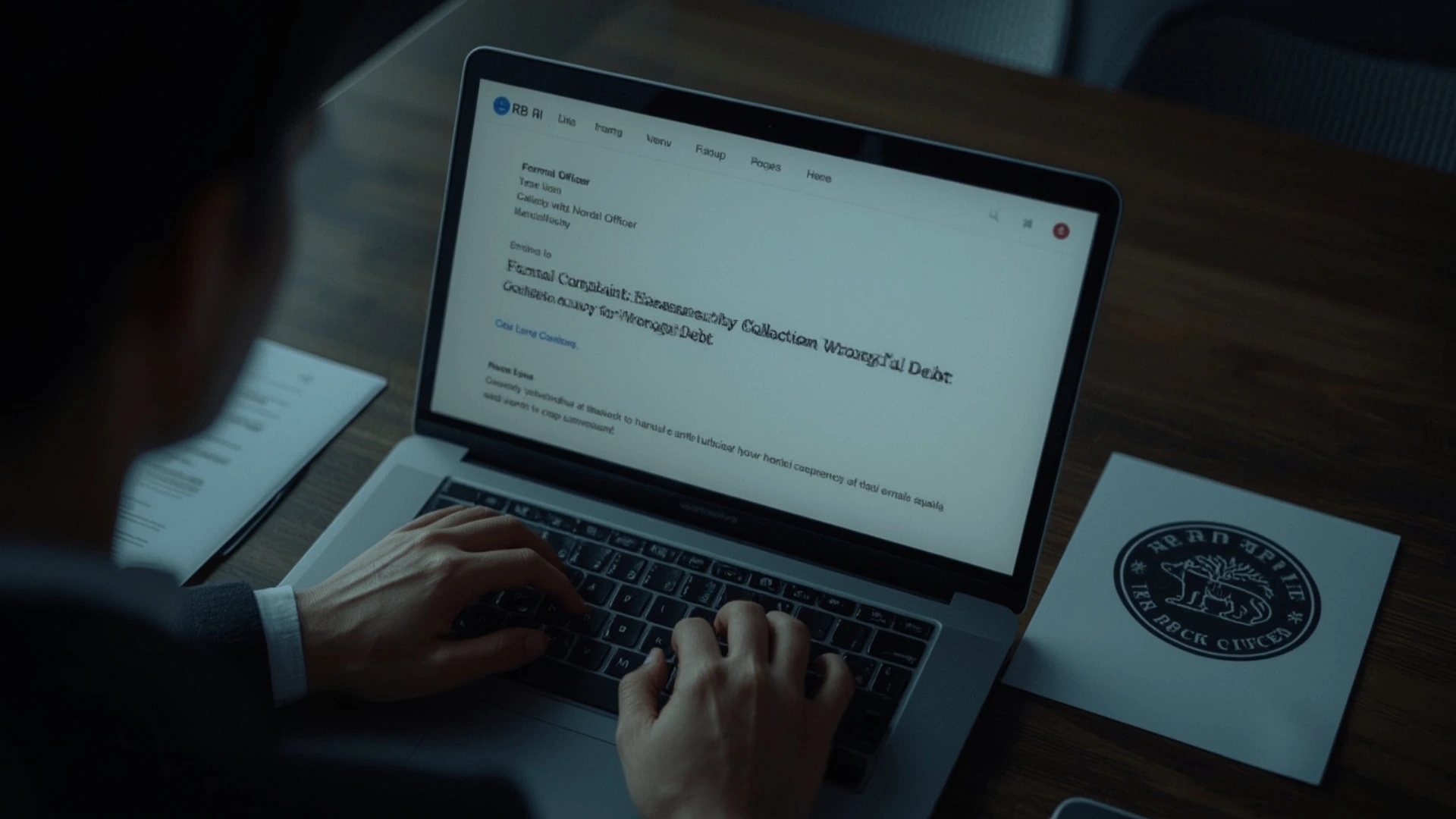
Your most powerful regulatory weapon is the Reserve Bank of India. The RBI has zero tolerance for harassment and has laid out specific rules for recovery agents.
The RBI’s Fair Practices Code: Your rights against agents
The bank is 100% responsible for the actions of the third-party collection agencies they hire. When an agent harasses you, you have the right to complain directly to the bank and then to the RBI. Your complaint is based on the violation of these key RBI guidelines:
- Time: Agents cannot call you before 7:00 AM or after 7:00 PM. Calls outside this window are a direct violation.
- Decency: Agents cannot use abusive, obscene, or threatening language.
- Privacy: They cannot discuss the debt with your family, friends, or co-workers (unless they are a guarantor).
- Harassment: They cannot call you repeatedly, send persistent or threatening messages, or threaten violence.
When you are the wrong person, the harassment is even more severe. The fact that a collection agency calling for debt that is not mine continues to call after being notified is a clear-cut case of deficiency in service by the bank that hired them.
The process: Filing a formal complaint with the bank’s Nodal Officer and then the Banking Ombudsman.
This escalation process—from the Nodal Officer to the RBI’s Banking Ombudsman—is the most powerful tool you have. It is the same official framework we recommend when a bank won’t give an NOC after a loan settlement and is highly effective.
- File with the Bank’s Nodal Officer: Your complaint from Step 4 of our previous plan should be escalated to the bank’s Nodal Officer (or Principal Nodal Officer). This is the highest level of internal grievance redressal. You can find their contact details on the bank’s website.
- Wait for 30 Days: The bank has 30 days to resolve your complaint.
- File with the RBI Ombudsman: If the bank does not resolve the issue, or if the harassment continues, you can now file a complaint with the RBI’s Banking Ombudsman. This is the official answer to how to complain to rbi for wrongful collection calls.
- Go to the official RBI Complaint Management System (CMS) portal:
cms.rbi.org.in. - File a new complaint, detailing the harassment, the loan account (that isn’t yours), the agency’s name, and the bank.
- Most importantly, upload your evidence: call logs, message screenshots, and the formal complaint email you sent to the bank. This paper trail is your proof.
- Go to the official RBI Complaint Management System (CMS) portal:
Level 2 Escalation: A Police Complaint for Harassment by a Recovery Agent for Wrong Debt
If the harassment becomes severe and you feel threatened, you should not hesitate to involve law enforcement. This is a crucial step when you need to assert your rights against collection agency for wrongful harassment.
When to go to the police: Clear threats, extortion, or extreme verbal abuse.
This step is necessary if the agent’s actions cross the line from annoying to criminal. This includes:
- Direct threats of physical harm to you or your family.
- Extreme, obscene, or sexually explicit abusive language.
- Threats that mimic legal authority (e.g., “we will get you arrested,” “we will seize your house,” which they cannot do).
- Blackmail or attempts at extortion.
How to file a complaint at your local cybercrime or police station and what evidence you’ll need (call logs, recordings).
- Gather Evidence: Save all call recordings (check your state’s laws on call recording), screenshots of abusive messages, call logs with dates and times, and the phone numbers used.
- Draft a Complaint: Write a simple letter detailing the harassment, the agency’s name, and the fact that the debt is not yours.
- Visit Your Local Police Station: Submit the complaint letter and evidence. They will likely file a “CSR” (Community Service Register) entry, which is the first step.
- File with the Cyber Crime Portal: If the harassment is primarily digital (WhatsApp, SMS, email), you should also file a police complaint for harassment by a recovery agent for wrong debt on the National Cyber Crime Reporting Portal .
Level 3 Escalation: Sending a Legal Notice for a Loan I Never Took in India
This is a parallel or final step that often yields the fastest results. You hire a lawyer to send a formal, legal notice to both the collection agency and the original bank.
When and why to hire a lawyer to send a formal Cease and Desist notice.
This is the right step if the harassment is persistent and you want to put a definitive, legal end to it. A legal notice for a loan I never took in India is a powerful tool. It shows the agency you are serious and are prepared to take them to court for harassment and defamation.
The power of a legal notice to stop all communication and protect your financial identity.
The lawyer will draft the notice on their official letterhead. It will state:
- You are not the borrower and do not owe the debt.
- You have repeatedly informed them of this fact.
- Their continued calls constitute illegal harassment and defamation.
- It formally demands they “cease and desist” all communication with you.
- It threatens further legal action (like a suit for damages) if they fail to comply.
When the legal department of a bank or a collection agency receives this notice, they will almost always stop the calls immediately. It is the most effective way to solve the problem of a collection agency calling for debt that is not mine and protect your peace of mind.
Frequently Asked Questions (FAQs)
What’s the first step if a collection agency calling for debt that is not mine contacts me?
Do not pay, do not admit to anything, and do not give any personal information. The first step if a collection agency calling for debt that is not mine contacts you is to gather intelligence: ask for the agent’s name, the agency’s name, the original bank, and the loan account number.
A collection agency calling for debt that is not mine must legally provide these details upon request.
Why do I keep getting calls for someone else’s credit card debt?
The most common reason for getting calls for someone else’s credit card debt is “recycled” phone numbers. The previous owner of your number likely defaulted on their debt, and the agency’s records are outdated.
Getting calls for someone else’s credit card debt can also be a case of mistaken identity (a similar name).
What are my rights against a collection agency for wrongful harassment?
Your rights against a collection agency for wrongful harassment are protected by the RBI. They cannot call you before 7 AM or after 7 PM, use abusive or obscene language, or threaten you.
Knowing your rights against a collection agency for wrongful harassment is the first step to fighting back.
Can a collection agency calling for debt that is not mine damage my CIBIL score?
No, a collection agency calling for debt that is not mine cannot damage your CIBIL score if the debt is not in your name. However, you must check your CIBIL report immediately to ensure you are not a victim of identity theft.
If the collection agency calling for debt that is not mine has your correct PAN, you must check your report.
What is the most effective way how to stop collection calls for debt that is not mine?
The most effective way how to stop collection calls for debt that is not mine is to create a formal paper trail. You must send a written complaint via email (and registered post, if possible) to both the collection agency and the original bank, demanding they remove your number from their records.
I’m getting collection calls for the previous owner of my phone number. What should I do?
If you’re getting collection calls for the previous owner of your phone number, you must formally inform the agency that the number has been reassigned.
State that you are not the person they are looking for and demand they cease calling. If the collection calls for the previous owner of your phone number continue, escalate with a written complaint.
How do I handle a collection agency calling for debt that is not mine that claims I am a ‘reference’?
If a collection agency calling for debt that is not mine claims you are a reference, your rights are clear: they can only ask for the borrower’s contact details.
They cannot demand payment, discuss the debt, or harass you. If the collection agency calling for debt that is not mine violates these rules, they are breaking RBI guidelines.
What should I do if a bank recovery agent calling for the wrong person is abusive?
If a bank recovery agent calling for the wrong person is abusive, they are violating RBI’s Fair Practices Code. You should immediately inform them you are recording the call (if legal in your state),
note the time, and file a formal complaint with the bank’s Nodal Officer. A bank recovery agent calling for the wrong person is the bank’s responsibility.
How do I complain to the RBI for wrongful collection calls?
You can complain to the RBI for wrongful collection calls via the Banking Ombudsman, but only after you have first complained to the bank’s internal grievance cell (like the Nodal Officer).
If the bank doesn’t resolve your complaint about wrongful collection calls within 30 days, you are eligible to escalate it to the Ombudsman.
When should I file a police complaint for harassment by a recovery agent?
You should file a police complaint for harassment by a recovery agent if the harassment becomes extreme or criminal. This includes direct threats of violence, extortion, or using obscene/abusive language. A police complaint for harassment by a recovery agent is a serious step for criminal intimidation.
I sent a letter to a collection agency calling for debt that is not mine, but they are still calling. What’s next?
If the collection agency calling for debt that is not mine ignores your written notice, your next step is escalation. You should file a formal complaint with the original bank’s Nodal Officer, stating that their appointed agency is harassing you.
If the collection agency calling for debt that is not mine still persists, you must then escalate to the RBI Ombudsman.
Is sending a legal notice for a loan I never took in India an effective strategy?
Yes, sending a legal notice for a loan I never took in India is a very effective escalation. A formal “Cease and Desist” notice from a lawyer often stops the harassment immediately, as it shows the agency you are serious. This is a powerful step if a legal notice for a loan I never took in India is required.
What is the RBI Fair Practices Code for recovery agents?
The RBI Fair Practices Code outlines what recovery agents cannot do. This includes (but is not limited to) calling before 7 AM or after 7 PM, using abusive language, harassing relatives who are not guarantors, or threatening violence.
The RBI Fair Practices Code is your main source of rights in this situation.
What if I am receiving harassing calls for a loan I never took and it’s on my CIBIL report?
This is a critical situation. If you are receiving harassing calls for a loan I never took and it’s on your CIBIL, you are a victim of identity theft. You must immediately file a dispute with CIBIL, file a police complaint for harassment by a recovery agent (and for fraud), and send a legal notice.
What is the easiest way how to remove my number from a collection agency list?
The easiest way how to remove my number from a collection agency list is to call them and state that they have the wrong number. However, the most permanent way how to remove my number from a collection agency list is to send a formal email or registered letter, which creates a paper trail and forces them to update their records.
Reclaiming Your Peace of Mind

Being harassed for a debt that isn’t yours is terrifying. But as this guide has proven, the law is firmly on your side, and this is a solvable problem.
My final advice is this: Do not be a passive victim. Be proactive, be professional, and create the paper trail we discussed. These aggressive collection agencies rely on your fear and your silence. By following this action plan, you take away both of those advantages.
As Anwar Hashmi, my mission here at cibilized.in is to protect your financial dignity. Use these steps to stop the harassment, clear your name, and restore the peace of mind you rightfully deserve.
You are not alone in this. I invite you to share your own experiences with wrongful collection calls in the comments section below.

A Note from the Author
A harassing phone call for a debt you don’t owe is more than just an annoyance—it’s an aggressive violation of your peace and financial dignity. These calls are designed to make you feel scared, confused, and powerless.
I wrote this guide to give you that power back.
Your phone number is not a public directory for collection agencies, and your name should not be attached to a stranger’s default. This 5-step action plan is not just advice; it’s your legal and practical shield. Use it to stop the calls, protect your name, and restore your peace of mind.
Anwar Hashmi,
Chief Editor, CIBILized.in

